Last Updated on October 4, 2026
If you’ve ever shopped for kitchen knives, you’ve probably seen two blades come up again and again: the chef knife and the santoku knife. Both are considered essential tools, both are highly versatile, and both can handle a wide variety of everyday prep tasks. That’s exactly why many home cooks wonder which one is better — or whether they really need both.
The truth is, neither knife is universally “better.” Each has its own shape, feel, cutting style, and strengths in the kitchen. Understanding the difference between a chef knife and a santoku knife can help you choose the one that fits your cooking habits, comfort level, and prep style.
Chef Knife vs Santoku Knife: Quick Answer
A chef knife is a Western-style all-purpose kitchen knife with a longer blade and a curved edge designed for rocking cuts. A santoku knife is a Japanese-style all-purpose knife with a shorter, flatter blade that works especially well for straight downward slicing, dicing, and chopping.
In simple terms:
- Choose a chef knife if you want a versatile, classic all-rounder for many kitchen tasks.
- Choose a santoku knife if you prefer a lighter knife with precise control and a flatter cutting motion.
What Is a Chef Knife?
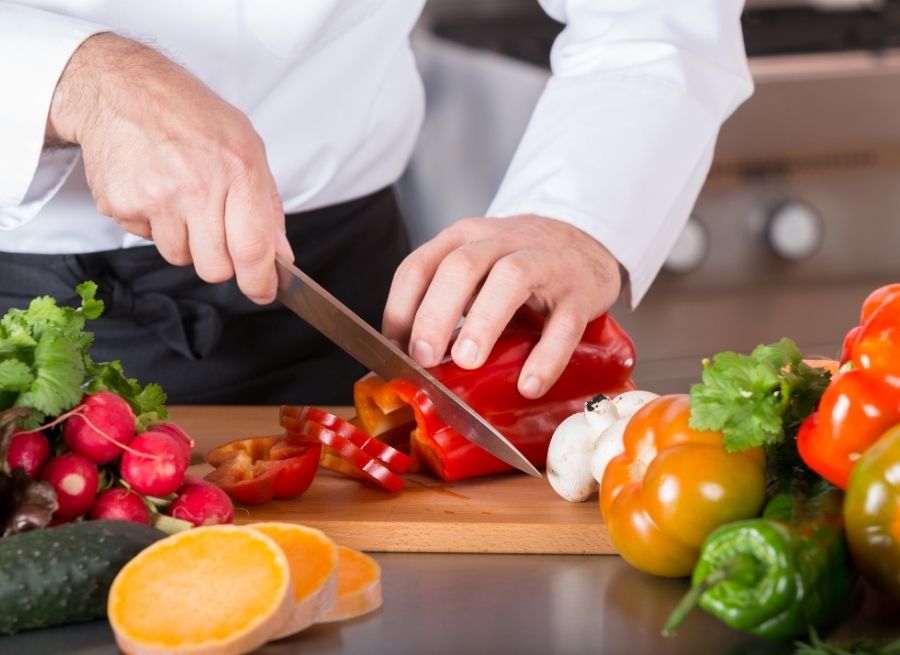
A chef knife is one of the most common and versatile knives found in Western kitchens. It usually has a broad blade, a pointed tip, and a curved cutting edge that allows the knife to rock back and forth on the cutting board.
Typical Features of a Chef Knife
- Blade length usually ranges from 8 to 10 inches
- Curved edge for rocking motions
- Pointed tip for detailed cutting tasks
- Heavier feel compared to many Japanese knives
- Well-suited for a wide range of ingredients
Best Uses for a Chef Knife
A chef knife is ideal for:
- Chopping onions, carrots, and celery
- Slicing meat and poultry
- Mincing herbs and garlic
- Dicing large vegetables
- Breaking down ingredients with a rocking cut
For many cooks, the chef knife is the ultimate kitchen workhorse because it can do just about everything reasonably well.
What Is a Santoku Knife?
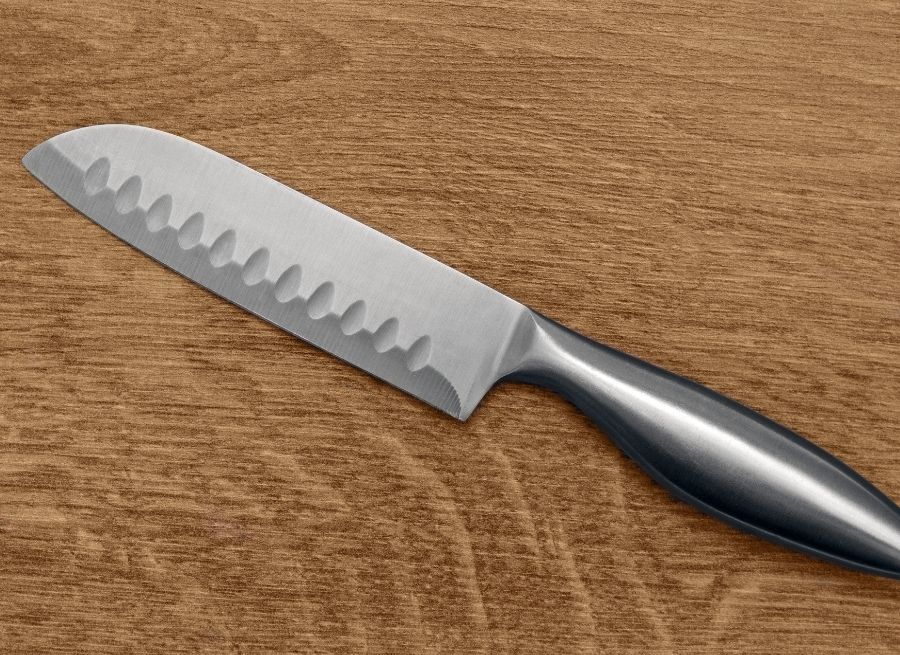
A santoku knife is a Japanese-style multipurpose kitchen knife. The word santoku is often translated as “three virtues” or “three uses,” referring to its ability to handle slicing, dicing, and chopping efficiently.
Compared to a chef knife, a santoku knife is usually shorter, lighter, and flatter along the edge. Many santoku knives also feature a granton edge, or shallow indentations along the blade, designed to help reduce food sticking during slicing.
Typical Features of a Santoku Knife
- Blade length usually ranges from 5 to 7 inches
- Flatter edge for straight up-and-down cutting
- Sheepsfoot-style blade with a rounded-down tip
- Lighter and often thinner than a chef knife
- Excellent control for precise slicing and chopping
Best Uses for a Santoku Knife
A santoku knife is especially good for:
- Slicing boneless meats
- Dicing vegetables
- Chopping herbs
- Cutting fish
- Preparing smaller fruits and vegetables with precision
Its lighter design makes it especially appealing to home cooks who want speed, accuracy, and easy handling.
Key Differences Between a Chef Knife and a Santoku Knife
Although these two knives serve similar purposes, they feel very different in actual use. Here are the biggest differences to know.
1. Blade Shape
The most obvious difference is the shape of the blade. A chef knife has a more curved edge and a pointed tip, while a santoku knife has a flatter edge and a more rounded-down tip.
This difference affects how the knife moves across the cutting board. A chef knife encourages a rocking motion, while a santoku performs best with a straight downward cut.
2. Blade Length
Chef knives are generally longer than santoku knives. An 8-inch chef knife is a common standard, while santoku knives are often around 7 inches or less.
The extra length of a chef knife gives you more cutting surface for larger ingredients like cabbage, watermelon, or thick cuts of meat. A santoku’s shorter blade can feel more manageable for smaller hands or tighter prep spaces.
3. Cutting Motion
This is one of the most important practical differences.
- Chef knife: Best for rocking, slicing, and sweeping cuts
- Santoku knife: Best for push cuts, chopping, and precise downward slicing
If you naturally rock the knife while chopping herbs or vegetables, a chef knife will probably feel more comfortable. If you prefer straight, controlled cuts, you may like a santoku more.
4. Weight and Balance
Chef knives are often slightly heavier and feel more robust in the hand. Santoku knives are typically lighter and may feel more nimble.
Neither is automatically better. Some cooks prefer the powerful, grounded feel of a chef knife, while others enjoy the lighter, more agile handling of a santoku.
5. Tip Design
The pointed tip on a chef knife is useful for detail work, scoring, and precise cutting tasks. A santoku’s sheepsfoot-style tip is less pointed, which can make it feel safer and easier to control for some users, but it may be less useful for tip-focused tasks.
Chef Knife vs Santoku Knife Comparison Table
| Feature | Chef Knife | Santoku Knife |
|---|---|---|
| Style | Western | Japanese |
| Typical Blade Length | 8–10 inches | 5–7 inches |
| Blade Edge | Curved | Flatter |
| Tip Shape | Pointed | Rounded/sheepsfoot |
| Cutting Motion | Rocking | Push-cutting and chopping |
| Weight | Usually heavier | Usually lighter |
| Best For | General all-purpose prep, larger ingredients | Precision slicing, dicing, and lighter prep work |
Which Knife Is Better for Home Cooks?
For most home cooks, the answer depends on comfort and cooking style more than anything else. Both knives are practical, versatile, and capable of handling everyday prep.
Choose a Chef Knife If You:
- Want one classic do-it-all kitchen knife
- Like using a rocking chopping motion
- Often prepare large vegetables or cuts of meat
- Prefer a more substantial, heavier knife
- Want a pointed tip for added versatility
Choose a Santoku Knife If You:
- Prefer a lighter, more compact knife
- Like straight downward slicing and chopping
- Cook a lot of vegetables, herbs, and boneless proteins
- Want excellent control for precise prep work
- Find larger chef knives too bulky or intimidating
Can You Own Both?
Absolutely. In fact, many home cooks enjoy having both a chef knife and a santoku knife in the kitchen. While they overlap in function, they each offer a slightly different feel and cutting experience.
You might use a chef knife for bigger prep jobs and a santoku for faster, more precise slicing during everyday cooking. If you cook often, owning both can give you flexibility without creating unnecessary clutter.
What Foods Are Better for Each Knife?
Foods Better Suited to a Chef Knife
- Large onions
- Butternut squash
- Cabbage
- Large cuts of chicken, beef, or pork
- Ingredients that benefit from rocking cuts
Foods Better Suited to a Santoku Knife
- Cucumbers
- Bell peppers
- Herbs
- Boneless chicken breasts
- Fish and smaller vegetables
There is plenty of overlap, but the blade shape and cutting style can make one knife feel easier for certain tasks.
Does Sharpness Matter More Than Knife Style?
Yes — in many cases, sharpness matters even more than knife style. A sharp chef knife and a sharp santoku knife will both outperform a dull blade, no matter how expensive or popular it is.
Whatever knife you choose, proper maintenance is essential. Regular honing, occasional sharpening, safe storage, and hand washing will help your knife perform better and last longer.
How to Decide Between a Chef Knife and a Santoku Knife
If you’re trying to choose just one, ask yourself a few simple questions:
1. How Do You Like to Cut?
If you naturally rock the knife while chopping, a chef knife is likely the better match. If you prefer straight slicing and chopping, a santoku may feel better.
2. How Big Are Your Typical Prep Jobs?
If you often prep large ingredients or cook in bigger batches, the longer chef knife can be more efficient. If your prep tasks are smaller and more detail-focused, a santoku may be easier to control.
3. What Feels Comfortable in Your Hand?
Comfort is personal. Some cooks love the balanced heft of a chef knife, while others prefer the lighter, agile feel of a santoku. If possible, hold both before buying.
Final Thoughts
When comparing a chef knife vs santoku knife, the biggest differences come down to blade shape, cutting motion, weight, and overall feel. A chef knife offers classic all-purpose performance with a curved blade that works beautifully for rocking cuts. A santoku knife offers lighter handling, a flatter edge, and excellent control for slicing, dicing, and chopping.
For many home cooks, either knife can serve as a dependable everyday essential. The best choice is the one that feels natural in your hand and fits the kind of cooking you do most often.
If you want maximum versatility, start with a chef knife. If you want precision and a lighter feel, a santoku knife may be the better fit.
Quick Recap
- Chef knife: Longer, curved, heavier, and ideal for rocking cuts
- Santoku knife: Shorter, flatter, lighter, and ideal for straight slicing and chopping
- Best overall choice: Depends on your cutting style and comfort
- Best kitchen setup: Many home cooks benefit from owning both