Last Updated on October 4, 2026
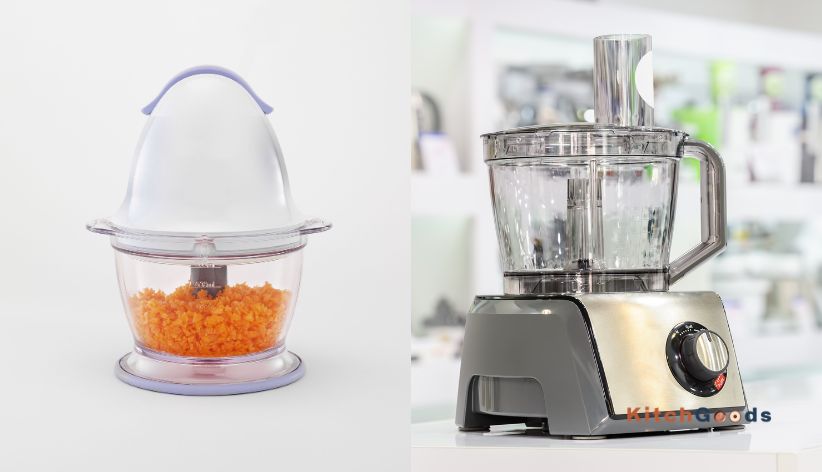
Preparing vegetables is one of the most common tasks in the kitchen. Whether you are making salads, soups, stir-fries, salsa, casseroles, or meal-prep bowls, chopping ingredients can take a lot of time. Two popular tools that can make this job easier are the vegetable chopper and the food processor.
At first, these tools may seem similar because both can help cut down prep time. However, they work differently and are best suited for different cooking needs. A vegetable chopper is usually simple, compact, and ideal for quick chopping, while a food processor is more powerful, versatile, and better for larger or more complex tasks.
If you are trying to decide between a vegetable chopper vs food processor, this guide will help you understand the differences, benefits, drawbacks, and which one is the better choice for your kitchen.
What Is a Vegetable Chopper?
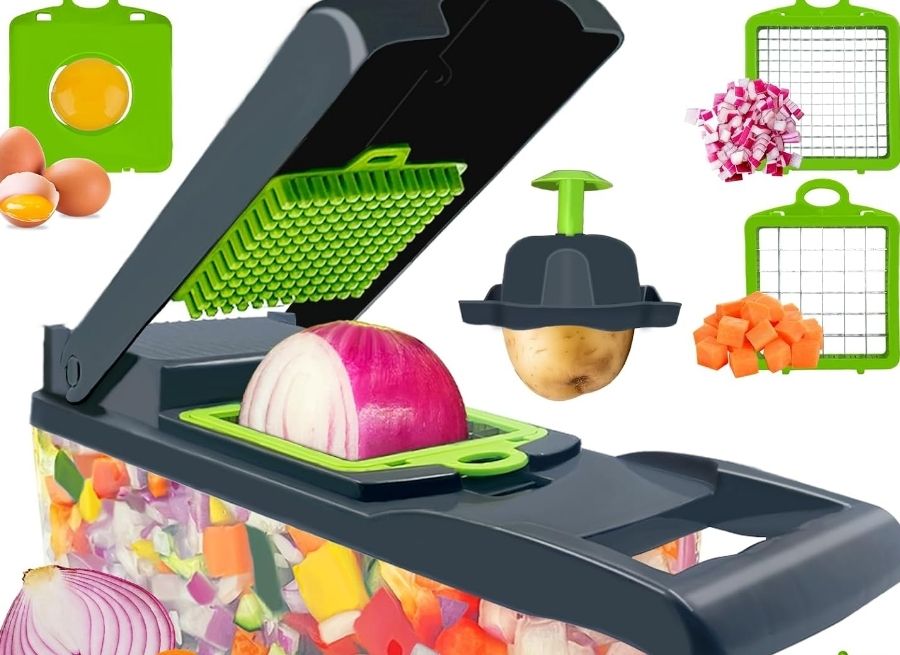
A vegetable chopper is a small manual or electric kitchen tool designed mainly for chopping vegetables and fruits into smaller pieces. Most manual vegetable choppers use a pressing, pulling, or pushing mechanism to force food through blades or rotate blades inside a container.
How a Vegetable Chopper Works
Vegetable choppers usually have sharp blades and a container to collect chopped ingredients. Depending on the design, you may press down on a lid, pull a cord, or push food through a cutting grid.
The result is usually diced, chopped, or roughly cut ingredients. Some models come with interchangeable blades for different sizes and shapes.
Common Foods You Can Chop with a Vegetable Chopper
A vegetable chopper is useful for many everyday ingredients, especially when you need diced vegetables quickly.
You can use a vegetable chopper for:
- Onions
- Bell peppers
- Cucumbers
- Tomatoes
- Potatoes
- Carrots
- Celery
- Zucchini
- Mushrooms
- Apples
- Hard-boiled eggs
- Herbs
- Garlic
- Fruit for salads
Main Benefits of a Vegetable Chopper
A vegetable chopper is popular because it is simple, affordable, and easy to use. It is especially useful for home cooks who want faster prep without using a large appliance.
Key benefits include:
- Saves time on chopping
- Easy to use
- Compact and easy to store
- Usually affordable
- Good for small kitchens
- Helps create evenly sized pieces
- Requires little setup
- Easy for beginners
What Is a Food Processor?
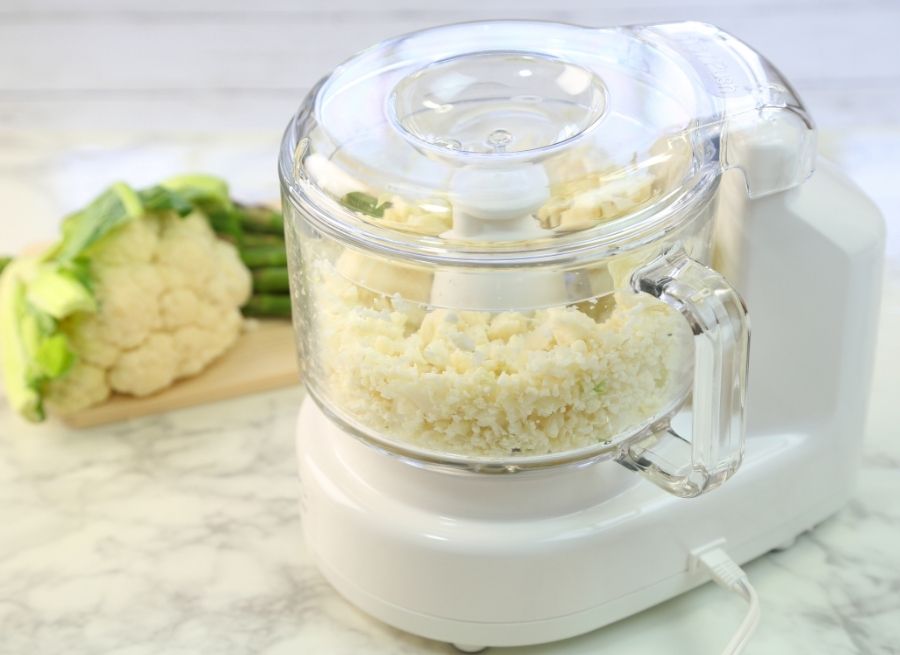
A food processor is an electric kitchen appliance designed to chop, slice, shred, puree, mix, and sometimes knead ingredients. It is more powerful than a vegetable chopper and can handle a wider range of tasks.
How a Food Processor Works
A food processor uses a motorized base, a work bowl, and interchangeable blades or discs. The standard blade chops and purees ingredients, while slicing and shredding discs can cut vegetables, cheese, and other foods into consistent shapes.
Because it runs on electricity and has a strong motor, a food processor can process larger quantities and tougher ingredients more efficiently than a manual vegetable chopper.
Common Foods You Can Prepare with a Food Processor
A food processor can handle many ingredients and recipes beyond simple vegetable chopping.
You can use a food processor for:
- Chopped vegetables
- Shredded cheese
- Sliced potatoes
- Sliced carrots
- Hummus
- Pesto
- Salsa
- Nut butters
- Pie crust dough
- Pizza dough
- Breadcrumbs
- Coleslaw
- Cauliflower rice
- Ground nuts
- Sauces and dips
Main Benefits of a Food Processor
A food processor is useful for serious meal prep, batch cooking, and recipes that require more than basic chopping.
Key benefits include:
- Very versatile
- Handles large quantities
- Chops, slices, shreds, and purees
- Saves time on big prep jobs
- Useful for dips, sauces, and dough
- More powerful than a vegetable chopper
- Creates consistent results
- Great for cooking from scratch
Vegetable Chopper vs Food Processor: Quick Comparison
Both tools can help with food prep, but they are not designed for the same level of work. A vegetable chopper is best for quick, simple chopping, while a food processor is better for bigger and more varied kitchen tasks.
Comparison Table
| Feature | Vegetable Chopper | Food Processor |
|---|---|---|
| Best For | Quick chopping and dicing | Chopping, slicing, shredding, pureeing, mixing |
| Power Source | Usually manual, sometimes electric | Electric |
| Size | Small and compact | Larger countertop appliance |
| Capacity | Small to medium | Medium to large |
| Versatility | Limited | High |
| Ease of Use | Very easy | Easy, but more setup |
| Cleaning | Usually simple | More parts to clean |
| Storage | Easy to store | Needs more cabinet or counter space |
| Price | Usually cheaper | Usually more expensive |
| Best Users | Beginners, small kitchens, quick prep | Frequent cooks, batch cooking, larger families |
Chopping Performance: Which One Chops Better?
Both tools can chop vegetables, but the results can be different depending on the ingredient and the type of cut you need.
Vegetable Chopper Chopping Performance
A vegetable chopper is excellent for basic dicing and chopping. It works well when you want evenly sized pieces for salads, soups, omelets, tacos, and stir-fries.
Vegetable choppers are especially useful for:
- Dicing onions
- Chopping peppers
- Cutting cucumbers
- Preparing salsa ingredients
- Making salad toppings
- Chopping potatoes for breakfast dishes
However, some vegetable choppers may struggle with very hard vegetables unless they have strong blades and a sturdy design. Soft foods like tomatoes can also become mushy if the blades are dull or the tool is overloaded.
Food Processor Chopping Performance
A food processor can chop ingredients very quickly. It is especially useful when you need to process a large quantity of vegetables at once.
However, food processors can sometimes overprocess ingredients if you are not careful. A few seconds too long can turn chopped vegetables into a puree or uneven mixture. For best results, use the pulse function.
Food processors are especially useful for:
- Chopping large batches of onions
- Making cauliflower rice
- Preparing coleslaw
- Chopping nuts
- Making salsa
- Processing herbs
- Preparing vegetables for soups
Winner for Chopping
- For quick, controlled dicing: Vegetable chopper wins.
- For large quantities: Food processor wins.
- For very fine chopping: Food processor wins.
- For simple everyday prep: Vegetable chopper is often easier.
Slicing and Shredding: Which Tool Is Better?
This is one area where the food processor has a major advantage. Most vegetable choppers are designed mainly for chopping and dicing, while food processors often come with slicing and shredding discs.
Vegetable Chopper for Slicing and Shredding
Some vegetable choppers include interchangeable blades for slicing or julienning. However, these features are usually limited and may require more manual effort.
A vegetable chopper can work for small slicing tasks, but it is not usually the best choice for large amounts of food.
Food Processor for Slicing and Shredding
A food processor is much better for slicing and shredding. With the right disc, it can quickly slice potatoes, cucumbers, carrots, zucchini, and other vegetables. It can also shred cheese, cabbage, carrots, and potatoes.
This makes a food processor ideal for:
- Coleslaw
- Potato gratin
- Hash browns
- Shredded carrots
- Sliced cucumbers
- Shredded cheese
- Zucchini fritters
- Meal-prep vegetables
Winner for Slicing and Shredding
The food processor is the clear winner for slicing and shredding.
Speed and Convenience
Both tools save time, but they do so in different ways. A vegetable chopper is fast for small jobs because it has little setup. A food processor is faster for large jobs because it has more power and capacity.
Vegetable Chopper Convenience
A vegetable chopper is convenient because you can take it out, chop a few ingredients, rinse it, and put it away. It does not require electricity unless you choose an electric model.
This makes it great for quick meals and small prep tasks.
Food Processor Convenience
A food processor can process large amounts quickly, but it requires more setup. You need to assemble the bowl, blade, lid, and sometimes discs. After use, there are more parts to wash.
For small tasks, this setup may feel like too much effort. For big tasks, it can save a lot of time.
Winner for Speed and Convenience
- For small jobs: Vegetable chopper wins.
- For large prep jobs: Food processor wins.
- For quick cleanup: Vegetable chopper usually wins.
- For batch cooking: Food processor wins.
Versatility: Which One Can Do More?
When it comes to versatility, the food processor is much more capable. A vegetable chopper is useful, but it is mostly designed for one main job.
Vegetable Chopper Versatility
A vegetable chopper can chop and dice many ingredients. Some models include extra attachments for slicing, spiralizing, or separating eggs, but these features vary by product.
A vegetable chopper is useful for:
- Chopped vegetables
- Fruit salads
- Salsa
- Salad toppings
- Omelet fillings
- Simple meal prep
Food Processor Versatility
A food processor can do many kitchen tasks. It can chop vegetables, slice produce, shred cheese, puree beans, make sauces, mix dough, and grind nuts.
A food processor is useful for:
- Hummus
- Pesto
- Nut butter
- Breadcrumbs
- Pie dough
- Pizza dough
- Shredded cheese
- Sliced vegetables
- Cauliflower rice
- Coleslaw
- Energy bites
- Sauces and dips
Winner for Versatility
The food processor wins for versatility.
Capacity: Which One Holds More Food?
Capacity matters if you cook for a family or prepare meals in batches.
Vegetable Chopper Capacity
Vegetable choppers usually have smaller containers. They are great for one or two onions, a few peppers, or small amounts of chopped ingredients.
If you need to chop a lot of vegetables, you may need to empty the container multiple times.
Food Processor Capacity
Food processors usually have larger bowls and can handle more ingredients at once. This makes them better for batch cooking, meal prep, and family meals.
A larger food processor can process several cups of vegetables, dough, or sauce at one time.
Winner for Capacity
The food processor wins for larger capacity.
Storage and Counter Space
Kitchen storage is important, especially if you have a small kitchen.
Vegetable Chopper Storage
Vegetable choppers are usually compact and easy to store in a cabinet or drawer. This makes them a good choice for apartments, dorm rooms, RVs, and small kitchens.
Food Processor Storage
Food processors are larger and often come with multiple blades and discs. They may need more cabinet space or a permanent spot on the countertop.
If you have limited kitchen storage, a full-sized food processor may feel bulky.
Winner for Storage
The vegetable chopper wins for compact storage.
Cleaning and Maintenance
Cleaning can determine how often you actually use a kitchen tool. If something is difficult to clean, it may sit unused.
Cleaning a Vegetable Chopper
Most vegetable choppers are fairly easy to clean, but food can sometimes get stuck in the blade grid. Some models include cleaning tools to remove trapped pieces.
Manual choppers usually have fewer parts than food processors, but sharp grid blades require careful handling.
Cleaning a Food Processor
Food processors have more parts, including the bowl, lid, blade, pusher, and sometimes discs. Many parts may be dishwasher-safe, but washing by hand can take longer.
The blade is very sharp, so it should be cleaned carefully.
Winner for Cleaning
- For fewer parts: Vegetable chopper wins.
- For dishwasher-safe convenience: Either can work, depending on the model.
- For overall simplicity: Vegetable chopper usually wins.
Price and Value
Budget is another important factor when choosing between a vegetable chopper and a food processor.
Vegetable Chopper Price
Vegetable choppers are usually affordable. Manual models are often inexpensive, making them a good choice for beginners or anyone who wants a simple prep tool without spending much.
Food Processor Price
Food processors usually cost more because they have motors, larger bowls, and multiple attachments. High-quality models can be more expensive, but they also offer more functions.
Which Offers Better Value?
A vegetable chopper offers great value if you mainly want faster chopping. A food processor offers better long-term value if you cook often and want one appliance that can handle many tasks.
Winner for Budget
The vegetable chopper wins for lower cost. The food processor wins for overall versatility and long-term value.
Which Is Better for Meal Prep?
Meal prep often involves chopping, slicing, shredding, and preparing large amounts of ingredients. Because of this, the food processor is usually the better choice for serious meal prep.
Vegetable Chopper for Meal Prep
A vegetable chopper is useful for small meal-prep tasks. It can quickly dice onions, peppers, cucumbers, and other ingredients for salads, bowls, and snacks.
It is best for light meal prep or preparing ingredients for one to three people.
Food Processor for Meal Prep
A food processor is better for larger meal-prep sessions. It can shred carrots, slice potatoes, chop large batches of vegetables, make sauces, and prepare dips.
It is especially useful if you cook multiple meals at once.
Winner for Meal Prep
- For light meal prep: Vegetable chopper works well.
- For serious batch cooking: Food processor wins.
Which Is Better for Beginners?
Beginner cooks often want tools that are easy, safe, and not intimidating.
Vegetable Chopper for Beginners
A vegetable chopper is beginner-friendly because it is simple to use and does not require advanced knife skills. It can help new cooks prepare ingredients more confidently.
Food Processor for Beginners
A food processor is also useful for beginners, but it may take more time to learn. Understanding the different blades, attachments, and processing times can require practice.
Winner for Beginners
The vegetable chopper is usually better for beginners who mainly want help with chopping.
Pros and Cons of a Vegetable Chopper
Pros
- Affordable
- Compact
- Easy to use
- Great for quick chopping
- Good for small kitchens
- Helps reduce prep time
- Usually easy to store
- Does not require much setup
Cons
- Limited functions
- Smaller capacity
- May struggle with hard vegetables
- Can be difficult to clean around blade grids
- Not ideal for pureeing, shredding, or dough
- Manual effort is required for many models
Pros and Cons of a Food Processor
Pros
- Very versatile
- Powerful motor
- Handles large quantities
- Chops, slices, shreds, purees, and mixes
- Great for batch cooking
- Useful for sauces, dips, and dough
- Saves time on big prep jobs
- Good for frequent home cooks
Cons
- More expensive
- Takes up more space
- More parts to clean
- Requires electricity
- Can overprocess ingredients
- May feel unnecessary for small tasks
Should You Buy a Vegetable Chopper or Food Processor?
The best choice depends on your cooking style, kitchen space, and budget. Both tools can be useful, but one may fit your needs better than the other.
Buy a Vegetable Chopper If You:
A vegetable chopper is the better choice if you want a simple, affordable tool for everyday chopping.
Choose a vegetable chopper if you:
- Mostly chop onions, peppers, cucumbers, or tomatoes
- Want to save time on small prep tasks
- Have limited kitchen space
- Prefer a manual tool
- Want something easy to store
- Are a beginner cook
- Do not need slicing, shredding, or pureeing
- Want a budget-friendly option
Buy a Food Processor If You:
A food processor is the better choice if you cook often and want a more powerful, multi-purpose appliance.
Choose a food processor if you:
- Cook from scratch regularly
- Prepare large batches of food
- Want to slice and shred ingredients
- Make dips, sauces, or dough
- Cook for a family
- Meal prep often
- Want one appliance for many tasks
- Have enough storage space
Do You Need Both?
Some home cooks may benefit from having both a vegetable chopper and a food processor. They serve different purposes and can complement each other well.
When Having Both Makes Sense
Having both may be useful if you cook frequently and want the right tool for different jobs.
A vegetable chopper can handle quick, small tasks, while a food processor can handle bigger or more complex recipes.
For example:
- Use a vegetable chopper for quickly dicing onions for dinner.
- Use a food processor for shredding cabbage for coleslaw.
- Use a vegetable chopper for salsa ingredients.
- Use a food processor for hummus, pesto, or dough.
When You Only Need One
If you have limited space or a small budget, choose the tool that matches your most common cooking tasks.
If you mostly chop vegetables, choose a vegetable chopper. If you want more functions, choose a food processor.
Final Verdict: Vegetable Chopper vs Food Processor
A vegetable chopper is best for quick, simple chopping. It is affordable, compact, easy to use, and ideal for everyday prep tasks. It is a great choice for beginners, small kitchens, and anyone who wants to reduce knife work.
A food processor is best for versatility and larger prep jobs. It can chop, slice, shred, puree, mix, and sometimes knead dough. It is the better choice for frequent home cooks, families, meal preppers, and people who cook from scratch often.
Simple Recommendation
- Choose a vegetable chopper if you want quick chopping and easy storage.
- Choose a food processor if you want more power, capacity, and versatility.
- Choose both if you cook often and want a simple tool for small jobs plus a powerful appliance for bigger tasks.
Conclusion
Both vegetable choppers and food processors can make cooking easier, but they are designed for different needs. A vegetable chopper is simple and convenient for everyday chopping, while a food processor is more powerful and versatile for larger cooking tasks.
If your main goal is to save time chopping vegetables, a vegetable chopper may be all you need. If you want a tool that can handle chopping, slicing, shredding, pureeing, and mixing, a food processor is the better investment.
Ultimately, the right choice depends on how you cook, how much space you have, and which kitchen tasks you want to make easier.